

Making Local Governments Work for the People and Places They Serve

Urban governance in India was designed to bring authority and accountability closer to citizens. In practice, however, the conditions required for urban democracy to flourish — effective devolution, structured participation, and empowered local political leadership — remain poor.
Janaagraha’s work on Decentralised Participatory Governance focuses on strengthening these institutional foundations, so that constitutional intent translates into effective urban governance.
Impact Goal 4
Greater Devolution of 3Fs — Funds, Functions, and Functionaries
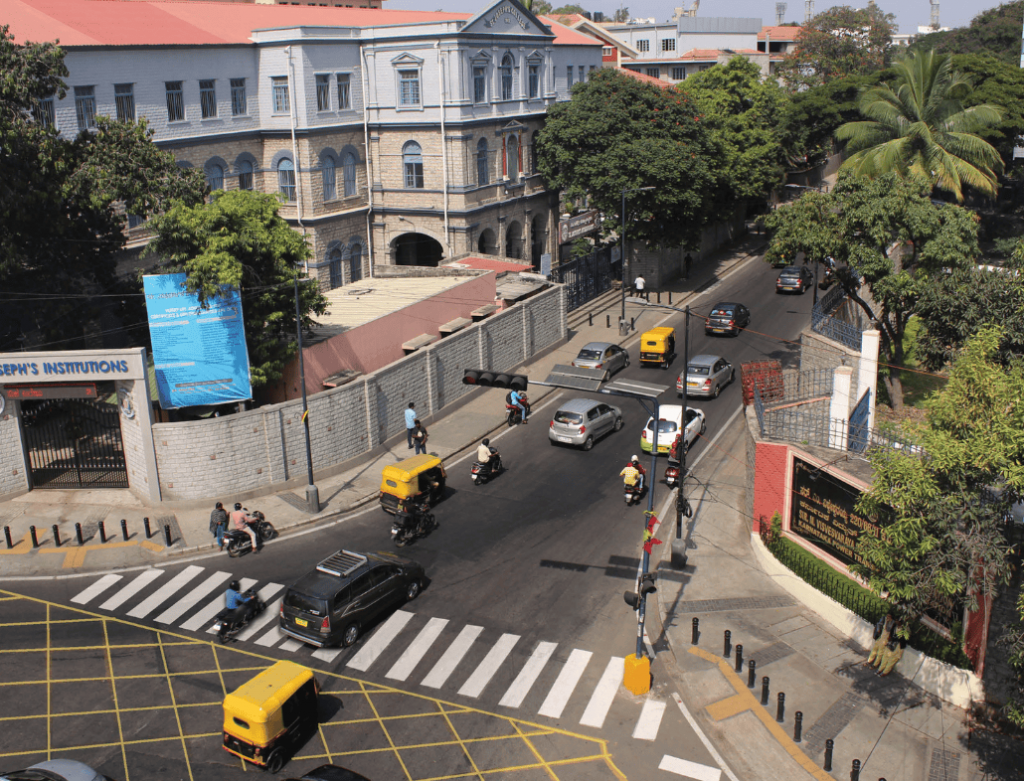
The 74th Constitutional Amendment Act (74th CAA) envisaged Urban Local Governments as institutions of self-government empowered through devolution of funds, functions, and functionaries — the 3Fs. In practice, however, states have implemented only 42% of the 74th CAA.
Janaagraha works with elected representatives and constitutional bodies to advance devolution through evidence-based reform — enabling cities to function as the democratic institutions they were designed to be.
Impact Goal 5
Platforms for Participation
Citizen participation, when institutionalised, aligns public decision-making with local priorities and strengthens accountability. In India’s cities, however, functional ward-level platforms are rare and opportunities for engagement remain ad hoc. Our education system also underemphasises civic learning and collaborative problem-solving, skills essential for effective engagement.
Janaagraha creates salience around ward committees and embeds civic learning in schools and colleges to enable sustained and informed engagement.
Impact Goal 6
Stronger Councillor Leadership
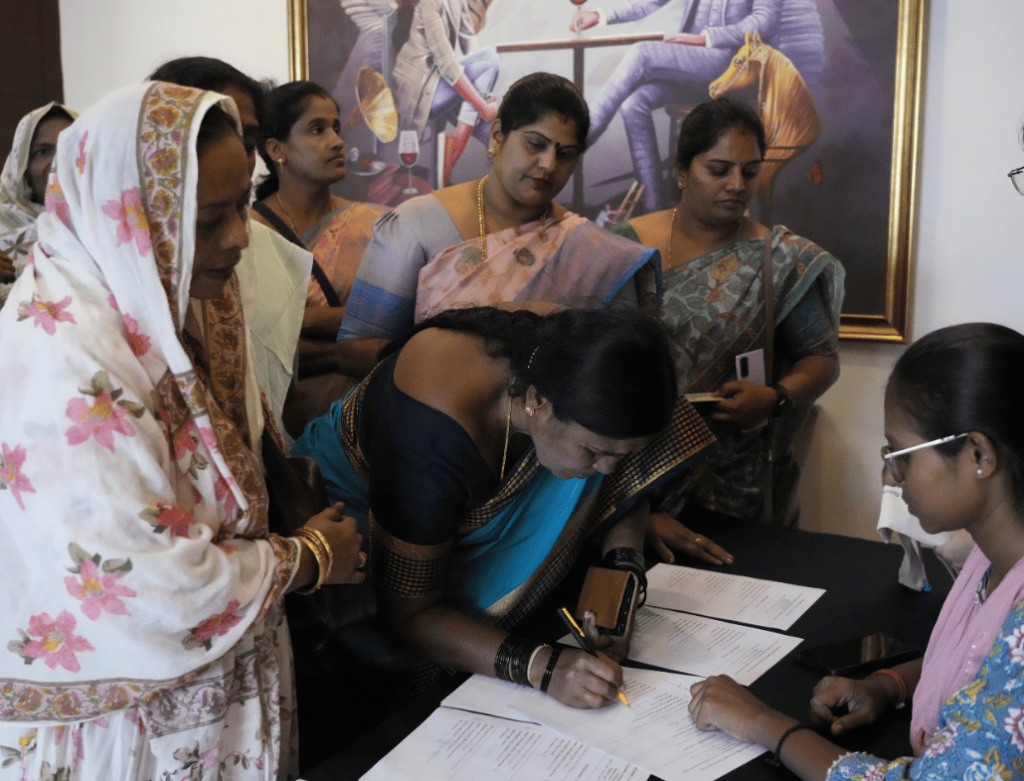
Councillors play a critical role in shaping how government responds to local needs, yet councillor leadership is largely assumed rather than institutionally enabled. Most are required to navigate complex systems, budgets, and citizen engagement mechanisms with no institutional training. Women councillors face additional barriers including proxy representation and constrained participation.
Janaagraha builds councillor leadership through competency-based development and peer learning, with an initial focus on women councillors.
Key Initiatives

Councillor Leadership Development Programme
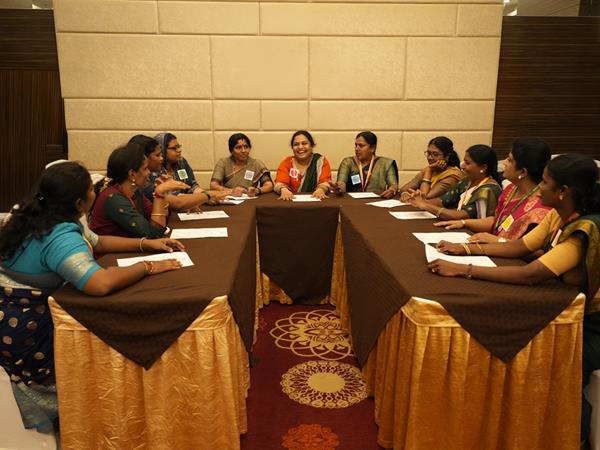
The Councillor Leadership Development Programme (CLDP) is Janaagraha’s structured approach to building councillor capability through practical modules on roles, urban governance processes, municipal finance, service delivery, and communication, combined with cohort-based peer learning. Designed for institutional adoption, CLDP is implemented with state urban departments and training institutions to embed capability-building within government systems.
The programme focuses on women councillors, recognising that women — despite comprising 46% of elected representatives — often face additional barriers to effective participation. Strengthening women’s voice and leadership in ward-level decision-making enables more gender-responsive priorities in local governance.
Slum Dwellers Associations (SDAs) in Odisha
Slum Dwellers Associations (SDAs) are citizen collectives comprising members chosen by and from slum communities to represent their needs, priorities, and concerns in urban governance. Legally recognised as the fourth tier of governance, SDAs function as implementation partners with Urban Local Governments, managing community assets and overseeing developmental works.
Working with the Government of Odisha’s Jaga Mission, Janaagraha institutionalised SDAs and launched a statewide capacity-building programme. Master trainers were trained across 30 districts, cascading training to over 9,000 SDA members who gained skills to govern their communities and work with civic authorities. Approximately 3,000 SDAs now operate across Odisha with real budgetary power, transforming excluded communities into empowered stakeholders in their own development.

Ward Samiti Balagas in Karnataka
Ward Samiti Balagas are citizen collectives creating public demand for the institutionalisation of ward committees. Conceptualised, incubated, and piloted by Janaagraha, Balaga chapters now have over 5,000 members in 11 city corporations across Karnataka.
Balaga members coordinate letter campaigns through elected representatives, submit requisition letters to municipal corporations, and organise public outreach to build awareness and demand for functional ward committees.
Over time, the Balagas have evolved into an independent citizen movement sustaining public demand for institutionalised participation at the local level.
Civic and Social Action Programme
The Civic and Social Action Programme (CSAP) combines classroom education with experiential learning to build civic consciousness among students. Currently operational in 50 government schools in Kurukshetra, CSAP has equipped over 100 schoolteachers through a Train-the-Trainer model designed to be replicable across government school systems.
Through CSAP, students engage in live-action projects on local issues, participate in community sessions, and present their solutions to local government officials.
By embedding experiential learning and democratic practice in schools, CSAP equips young citizens with the civic capabilities required for sustained and informed democratic engagement.
CAG Audits on Implementation of the 74th CAA
The Comptroller and Auditor General (CAG) of India conducted first-of-its-kind performance audits assessing the implementation of the 74th Constitutional Amendment Act (CAA) across 18 states and 393 Urban Local Governments during 2019-2024. Janaagraha supported the design, pilot, and scaling of this audit process, and synthesised findings into a compendium released in November 2024.
The findings reveal that only 4 of 18 constitutionally mandated functions are effectively devolved, 1,600 ULGs lack elected councils, and significant resource and capacity constraints persist.
These audits provide the accountability mechanism required for reform, holding states accountable to constitutional mandates while equipping policymakers with the data needed to strengthen devolution and empower urban local governments.
Impact Highlights

Impact Highlights

Councillor Leadership Development Programme piloted with 90+ women councillors, building structured capability for ward-level leadership.

Ward Samiti Balagas evolved into an independent citizen movement with 5,000+ members across 11 city corporations in Karnataka.
Civic and Social Action Programme operational in 50 government schools in Kurukshetra, engaging 11,482 students in experiential civic learning through 184 live-action projects.
CAG's first performance audits on the 74th Constitutional Amendment Act conducted across 18 states and 393 Urban Local Governments, establishing systematic evidence on devolution gaps.
3,000 Slum Dwellers Associations institutionalised in Odisha with real budgetary power, transforming 1,684 slums and benefiting over 2,04,700 families.