Over the last decade, approximately INR 8.36 lakh crore has been invested in India’s cities through central government missions and Finance Commission grants. Yet for most urban residents, this investment has not translated into improved quality of everyday life. Housing is increasingly unaffordable, commutes are longer and more stressful, public services remain inadequate, and green cover is disappearing. These conditions affect not only liveability but also the economic potential of cities, which currently generate over 60% of India’s GDP.
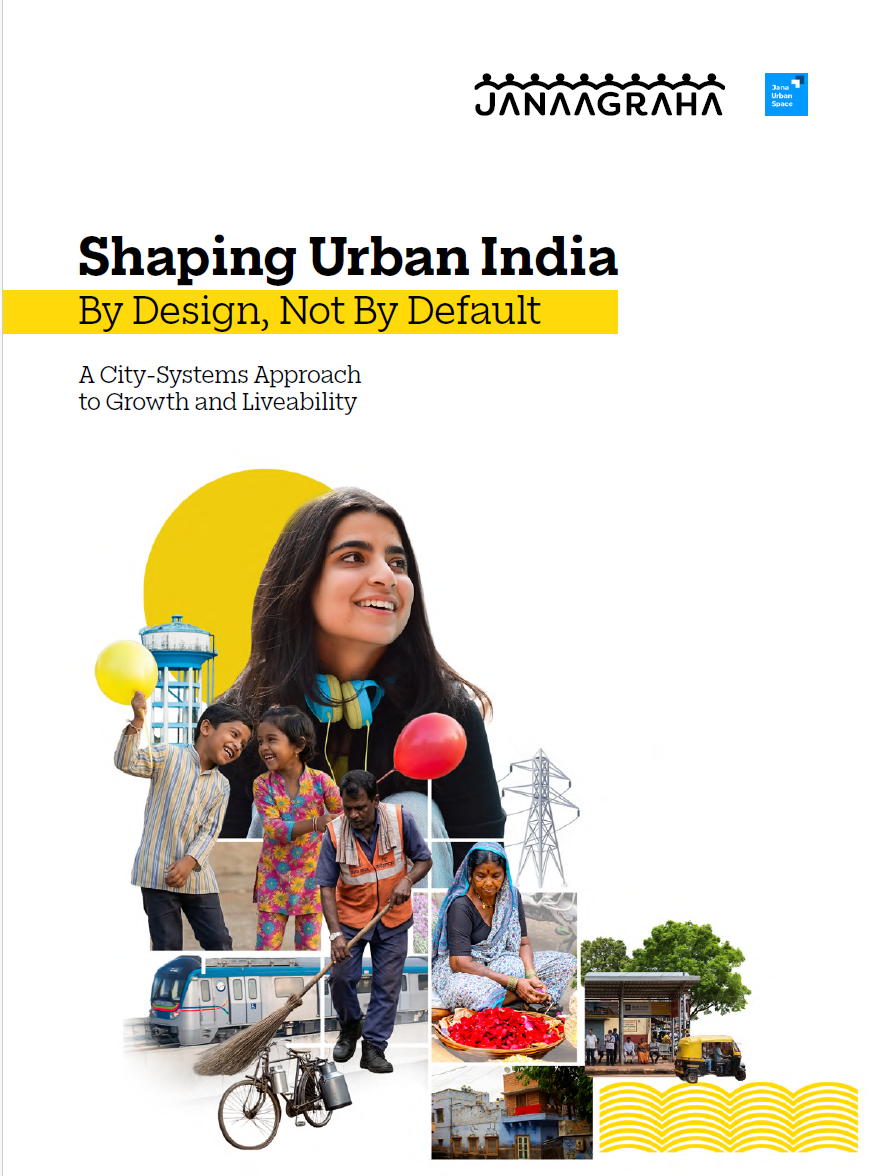
Shaping Urban India: By Design, Not by Default examines why this gap between investment and outcomes persists. Using a city-systems framework, the report traces the visible challenges in India’s cities to systemic causes: outdated planning laws, fragmented governance, weak municipal finances, and limited local government autonomy. Its central argument is that Indian cities are evolving largely by default because the city-systems that shape how they are planned, governed, and managed have not been equipped to deliver growth and liveability together.
The report proposes five big shifts to catalyse city-systems reform: investing in walkability and public transport, implementing City Action Plans, adopting differentiated governance models, building city-level data systems, and recognising Urban Local Governments as empowered governments of the city. These shifts are grounded in evidence, informed by practice, and likely to show results within years, not decades.